How We Help Teams Make Analytics Systems Work

We help organizations turn fragmented, hard-to-trust analytics into a reliable system leaders can actually use to make decisions.

Most teams already have data, dashboards, and tools in place. What they need is a better operating system for decisions.

Most Teams Come To Us In One Of These Situations

These are not failures. They're signs that analytics has outgrown the way it was originally set up.

How We Typically Help

Every engagement is shaped by the business context, but the work follows a consistent logic.

Diagnose > Design > Build or Guide
Diagnostic scan over data models dashboards and metrics 1

Diagnose

Understand what's really happening beneath your dashboards.

  • Review models, metrics, and reports
  • Clarify structural and governance issues
Blueprint of clean metric architecture and governed definitions 2

Design

Create a foundation teams can trust and scale.

  • Align and simplify models
  • Establish scale-ready standards
Analytics system being implemented with stable pipelines and dashboards 3

Build Or Guide

Execute in the way that creates the most leverage.

  • Refactor or rebuild assets
  • Provide senior guidance or hands-on execution

Not every engagement looks the same, but every engagement starts with clarity.

What Success Looks Like

When analytics is structured correctly, the change is noticeable.

Analytics stops being a source of friction and becomes the foundation for decision intelligence.

Example transformation

What a foundation reset is designed to change

Before Many dashboards, competing definitions, recurring number debates.

A common pattern: every team has a report, but no one is fully confident which one should guide decisions.

After Governed metric logic, fewer executive views, cleaner weekly review.

The target state: the same questions move faster because the foundation underneath the dashboards is aligned, and the data is stable enough to support future intelligence work.

Diagnostic detail Common Analytics Patterns We're Brought In to Fix Open the diagnostic detail

Use these examples to spot whether the problem is tooling, structure, ownership, or decision design.

1 / 7

Slow Or Brittle Power BI Environments

Problem
Reports technically work, but refreshes, filters, and model changes are fragile.
Example
A leadership dashboard takes minutes to load and breaks whenever a new slicer is added.
Fix
Separate the model, metric layer, and reporting views so performance does not depend on one overloaded file.

Metrics Defined Differently Across Teams

Problem
Teams use the same metric name but apply different logic, filters, or time windows.
Example
Sales, finance, and product all report active customers, but each number is different.
Fix
Create governed definitions and assign ownership before rebuilding dashboards.

Dashboards That Don't Answer Real Questions

Problem
Reports are polished, but they do not map to how leaders actually make decisions.
Example
The dashboard shows every funnel step but not the operational tradeoff leadership needs to make.
Fix
Start from decision workflows, then rebuild reporting around the questions that matter.

Analytics Without Structural Ownership

Problem
One capable person becomes the unofficial owner of every metric, report, and exception.
Example
Every dashboard request waits for the same analyst, even when the issue is governance.
Fix
Define ownership for models, metrics, and decision logic so the system can scale.

Blended Data Sources Without A Modeling Strategy

Problem
Data sources are joined inside reports instead of governed upstream.
Example
CRM, billing, and product data are blended differently depending on who built the report.
Fix
Design a stable modeling layer before adding more dashboards or sources.

Executive Reviews Built Around Too Many Signals

Problem
Leadership reviews include too many metrics without a clear threshold, owner, or decision path.
Example
A weekly operating review contains 30 charts, but no one can tell which 5 signals require action.
Fix
Separate operating signals from context metrics and map each priority signal to an owner, trigger, and response.

Predictive Work Blocked By Unstable Standards

Problem
The team wants forecasting, scoring, or AI-assisted intelligence, but the underlying definitions and data rules still shift.
Example
A churn, risk, or operational score is requested before the source metrics have stable logic or ownership.
Fix
Govern the foundation first so Intelligence Lab work can build on trusted signals instead of amplifying messy ones.

After foundation fixes, teams see:

Optimized analytics pipeline showing faster performance

Faster Performance

Many reports consolidating into fewer clearer dashboards

Fewer Reports

Analytics question resolving into a clear answer path

Clearer Answers

Trusted analytics signal with verified decision network

Renewed Confidence

Where Teams Typically Go Next

The path starts with a free fit check, then deepens only when the situation calls for it. Most teams move from diagnosis into a reset or ongoing senior ownership. Intelligence Lab sits below as the premium path once the foundation is ready for advanced intelligence work.

Analytics health check diagnostic scan of dashboards and metric logic

First step for almost every team

Analytics Health Check

  • Starts with a free fit check before paid scope
  • Identifies where trust, logic, ownership, or reporting flow is breaking
  • Clarifies whether the next move is a reset, fractional support, lab work, or no engagement

A scoped diagnostic that turns scattered analytics friction into a clear issue map, fit recommendation, and practical next step.

Start With a Free Fit Check
Mismatched dashboards being reconciled into a trusted analytics signal

Best when trust is broken now

Decision System Reset

  • Dashboards exist but are not trusted
  • Decision workflows need to be clarified
  • Performance or model structure has become brittle

A focused rebuild that realigns definitions, metrics, ownership, and decision cadence around how leaders actually make decisions.

Explore Decision System Reset
Analytics system being implemented with stable pipelines and dashboards

Best when analytics needs a senior owner

Fractional Analytics

  • Analytics has outgrown its original setup
  • One or two people are a bottleneck
  • Leadership needs judgment, not just execution

Ongoing senior guidance to keep standards, priorities, reporting cadence, and decision logic useful as the business changes.

Explore Fractional Analytics

Premium path once the foundation holds

Intelligence Lab

When core metrics, ownership, and definitions are stable, Intelligence Lab turns trusted signals into predictive frameworks, governed intelligence layers, executive digests, and decision products.

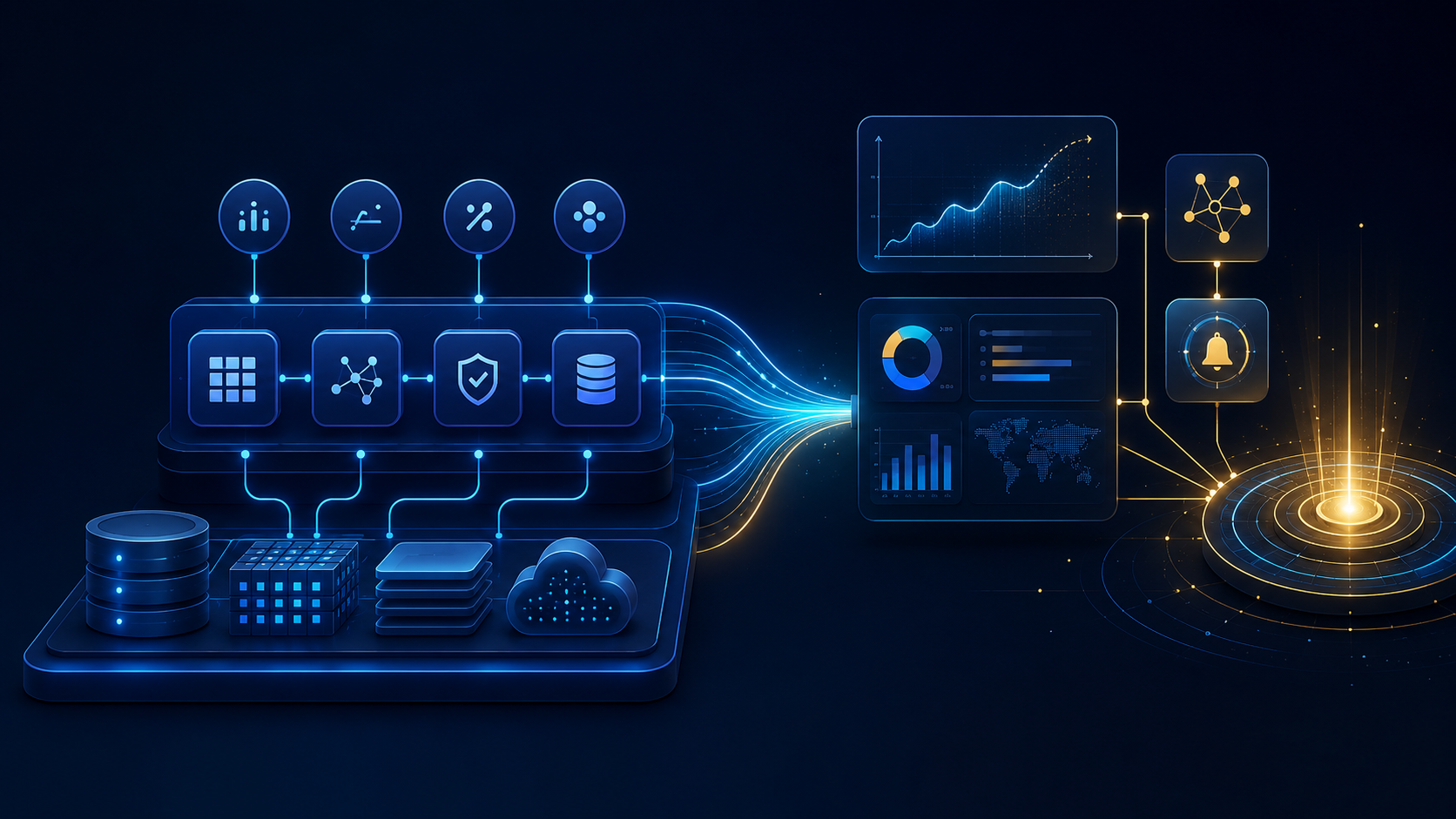
Governed analytics foundation flowing into predictive intelligence systems Explore Intelligence Lab

Not sure which path fits best? Start with the fit check. The goal is to choose the right level of engagement, not force a larger scope too early.

Foundation to intelligence

A trusted foundation is what makes Intelligence Lab work possible.

The reset work is not the ceiling. It creates the standards, ownership, and trusted signals that make predictive intelligence credible instead of noisy. Once the foundation holds, Intelligence Lab turns those standards into scoring, prioritization, forecasting, and executive intelligence products.

Advanced illustration showing a governed analytics foundation evolving into predictive intelligence and executive decision products
01

Operations Intelligence Digest

Ranks fragmented operational signals so leaders can see where attention is needed first.

02

Governance and RLS Architecture

Connects identity, access, semantic models, and metric logic into a scalable governed layer.

03

Enterprise Outcome Studio

Frames analytics transformation around measurable outcomes, operating standards, and adoption.

04

Customer Health Intelligence

Surfaces account risk, retention signals, and emerging customer friction before review cycles.

Explore Intelligence Lab
Low-risk ways to start Reducing Risk in Analytics Systems Open engagement safeguards

How We Keep Engagements Focused

The Data Strategy Roadmap is a standalone engagement with no obligation to continue:

  • Clear exit points are defined before build work begins
  • Documentation and knowledge transfer are included by default
  • Scope is explicitly bounded to prevent surprise expansion
This keeps work aligned to value, not momentum.

Build analytics leaders can trust.

Get a clearer path for fixing the systems, definitions, and ownership beneath your reporting.

Request a Free Fit Check